

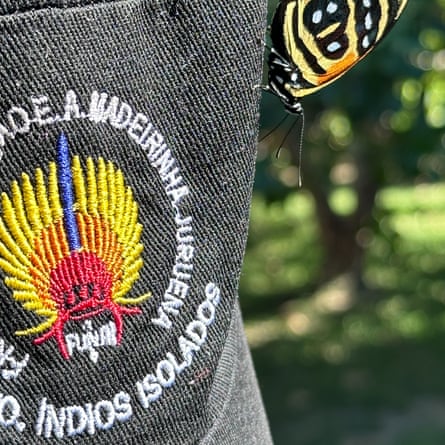
In 2024, agents from the federal body for Indigenous peoples trekked over a vast distance through dense rainforest on the southern edge of the Amazon region. Their task was to monitor and aid in safeguarding an isolated community with little to no interaction with the outside world.
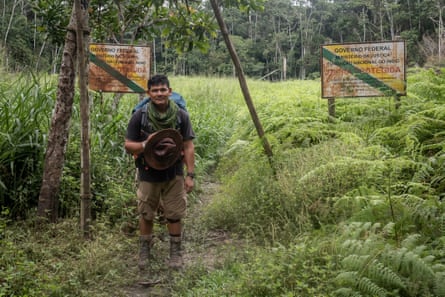
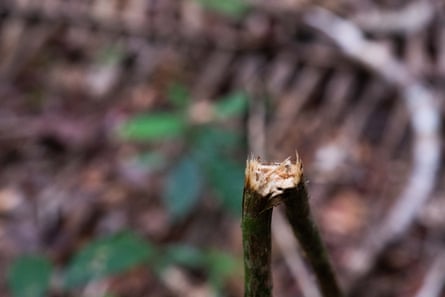
Their discoveries included a freshly woven container made from palm fronds, a child’s footprints by a riverbank, and tree trunks freshly cut to extract honey. They also found abandoned shelters sinking into the forest and remnants of foraged food near previous campsites. These were all clear signs that the Kawahiva people remained in the area.
Government Inaction Hinder Constitutional Protection
Despite a high court order approving a set of protective measures for the vulnerable tribe, the national authorities has not followed through. The approved measures included fast-tracking the official marking of their land and outlining forest protection strategies.
Bureaucratic delays, financial shortfalls, and armed disputes over territory—including assaults by individuals linked to the deforestation business—have stalled the entire process.
Without physical boundaries, deforestation agents persist in advancing, leaving the Kawahiva at grave risk of genocide. Advocates label the stalling a willful and dangerous infringement of the country's constitution.
“The inaction in land protection is not only illegal, it is also profoundly hazardous.”
A Forest Under Siege
The intended vast Indigenous land remains without official demarcation, as required by law. It is considered the greatest expanse of vulnerable jungle in Brazil that is the domain of isolated tribes.
Immediately beyond the territorial limits, the view changes dramatically. The vegetation is cleared for pastureland. Barbed wire and barriers are going up, and access routes are stretching farther into the natural habitat.
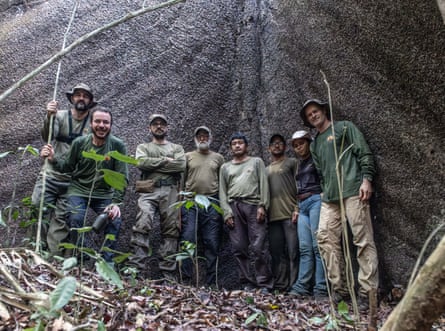
Following the expedition, a agency head for Indigenous affairs vowed to finalize the demarcation. “We are employing all possible efforts to make certain that the Kawahiva land is demarcated,” the official stated.
Money Problems and Rising Conflict
The official mapping of the 320-kilometer border involves installing boundary posts. This is seen as a key measure to demonstrate to loggers and farmers that the state will enforce about defending the land. However, the work is on hold.
Financial resources has been a major stumbling block. Initial plans to use federal payments from a infrastructure development fell through. The agency has since sought other sources.
It has now turned to a technical academic body. “We have a cooperative agreement that we’ve used successfully before,” explained an official. “The on-ground work is planned to begin in early 2026.”
The institute acknowledged that discussions were in late stages but did not provide a timeline.
Complicating everything is what officials term a “highly tense environment in the region,” which is expected to require an law enforcement escort during any boundary marking.
Threats and Intimidation
The threat of violence is real. In the past, an armed group assaulted a government base in the territory, resulting in a firefight where one attacker was killed. More recently, security personnel were stationed in the area.
Recently, an threatening communication surfaced in which a man, identifying as a local leader, made threats against the lead field agent. The individual, believed to be associated with local loggers, boasted to have searched the land “trying to find those isolated Indians.”
He is allegedly charged with several illegal activities, including charges related to the violent assault on the agent. “Our operations are hindered because of this guy,” the man said in the recording.
A Race Against Time
Anthropologists and rights advocates point out that it has been over two decades since the location of the Kawahiva community was verified. “Throughout this time, illegal settlers have sought to overturn the territorial status in court,” noted one expert.
They raise a worrying prospect: that the present holdup is a deliberate political tactic rather than a procedural one. This leads to fear that action may not happen even in the coming year.
The upcoming elections adds urgency. Many believe that the next two years represents the closing window for this demarcation effort to be completed, before a potential administration change could freeze protective measures, as has happened before.
The supreme court directive was the result of a legal action filed by a national Indigenous organization. The court highlighted the “risk of genocide, starvation, and acculturation” facing the community.
A lawyer involved described the process as “not moving,” with the court awaiting compliance. The consequences of delay are stark. “Furthermore, it is incredibly perilous and puts the lives at risk of the isolated Kawahiva,” warned a representative from an international advocacy group.

